
Top 10 health insurance companies in the U.S.
Deciding to offer or enroll in health insurance is a crucial decision for employers, individuals, and families. It can be overwhelming to know where to start, especially if you’re a small business without an HR team or a benefits specialist. However, putting in the time and effort to set up a formal health benefits plan is well worth it.
Offering an employer-sponsored health insurance plan has several advantages, including helping retain and attract employees, making your business stand out, and contributing to a happy, healthy workforce.
In this article, we’ll list the top 25 health insurance companies in the United States by market share. We’ll also provide alternative coverage options if you want to offer something more cost-effective and flexible than traditional group health plans.

What traditional group health insurance is, and why rising costs can be challenging for small and midsize employers.
Which health insurance companies are the largest in the U.S. by market share in 2024.
Alternatives to group health plans and how they can help employers control costs.
What is traditional group health insurance?
About 154 million individuals have an employer-sponsored group health plan. So, let’s review those types of policies before diving into the top health insurance companies in the U.S.
With traditional group health insurance, employers choose a group medical plan for their company and offer coverage to their employees and eligible dependents at a reduced rate. Most health insurers require businesses to fulfill a 70% minimum participation rate. If you don’t have enough employees who enroll in coverage, you won’t be able to offer the plan.

Insurance carriers offer various plan types, such as:

Top 10 U.S. health insurance companies listed by market share
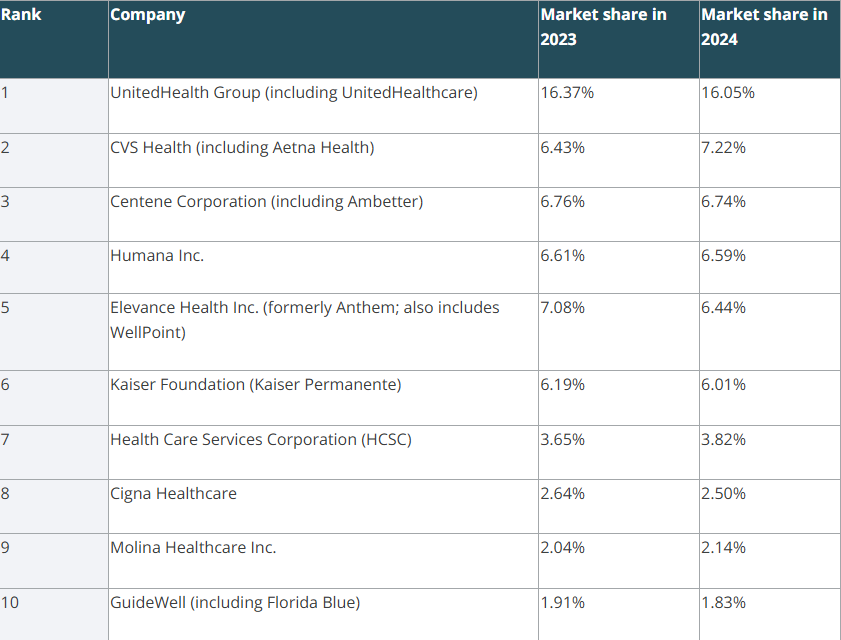
Suppose you’re an employer interested in offering a group health plan or an individual looking to purchase a plan on a public or private exchange. In that case, it’s vital to understand which health insurance companies are popular and provide a wide range of products and medical services. One way to rank health insurance companies is by market share, or size, which reflects each company’s share of the health insurance market.Below are the top 10 health insurance companies in the United States listed by market share size in descending order, according to the National Association of Insurance Commissioners’ (NAIC) 2024 Market Share Report2, which was published in March 2025.
How much do health insurance companies receive in premium income?
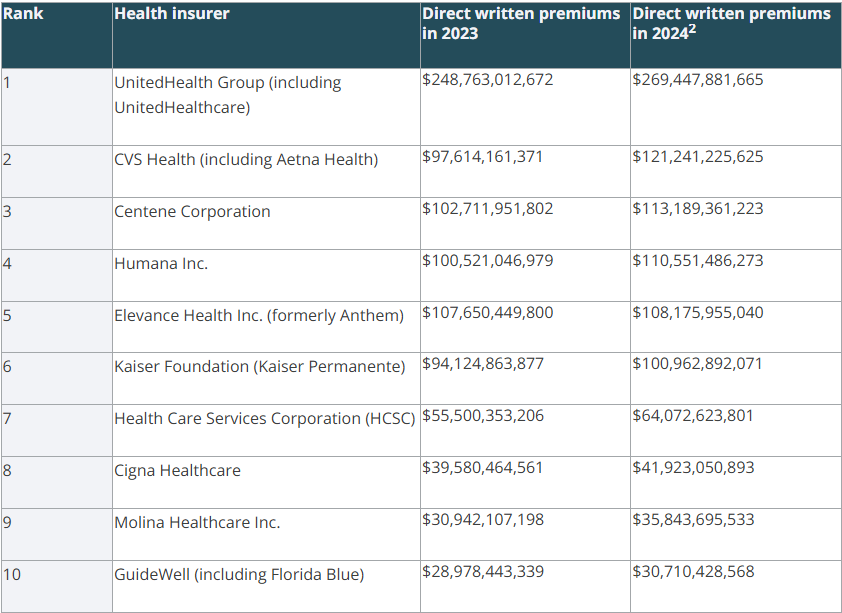
According to the 2024 NAIC Health Insurance Report, health insurers in the United States earned approximately $1.2 trillion in total net earned premiums3. This was a 9% increase (or $122 billion) in premium spending from U.S. consumers in 2023.
UnitedHealth Group, which tops our above list as the largest in the insurance market, wrote roughly $269 billion in premium income in 2024. In contrast, Blue Cross Blue Shield of Massachusetts wrote $9.7 billion.
National health professionals in the insurance industry expect increased demand for medical services due to several factors, such as inflation, worsening health conditions, and an aging, higher-risk patient population.
Considering this, employers of all sizes can better attract and retain their employees by offering a range of health insurance options and other benefits, such as wellness programs, to support their employees’ future medical needs.
Why HRAs and health stipends are a better option than group coverage for small employers
With premium prices rising, it can be difficult for small and midsize businesses to budget for group medical insurance. Small organizations may also struggle to meet minimum participation requirements. However, more health insurance options exist for organizations that want to break free from traditional benefits. HRAs are one of those options.
An HRA is a health benefit you can use to reimburse employees, tax-free, for out-of-pocket medical services, health insurance premiums, or a combination of the two. With an HRA, you set a monthly allowance that your employees can spend on medical costs. Once employees make an approved purchase, you reimburse them up to their set allowance amount. This gives them more control over their healthcare and over their financial support for paying medical bills.
Conclusion
While the number of health insurance companies offers employers many ways to offer a traditional group health benefit, it’s essential to consider other, more flexible options.
HRAs are an easy way to offer affordable health benefits without diving headfirst into the waters of group plan administration. They also give your employees the autonomy to choose the health plans and provider networks that best suit them and their families. If you’re an employer considering an HRA, we would love to help you get started.